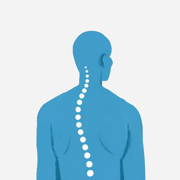
Posterior pelvic tilt: the mirror image of anterior tilt
Posterior pelvic tilt is when the pelvis rotates backward, tucking the tailbone under and flattening the natural curve of your lower back. It's the mirror image of anterior pelvic tilt, and it's the pattern long hours of sitting tend to produce. The corrective work runs in the opposite direction too.
What a tucked pelvis looks like from the side
Two bony landmarks tell the story. Find the ASIS — the pointy front edge of the hip bone you hook your thumbs on — and the pubic bone below it. In a neutral pelvis those sit roughly in the same vertical plane. In a posterior tilt the pubic bone drifts up and forward while the ASIS rolls back, like a bucket tipping its water out the back.
Downstream, the lumbar curve shallows, the tailbone points more toward the floor than behind you, and the ribs settle toward the pelvis. A side-on photo shows a long flat lower back instead of the small hollow. Tilt sits on a spectrum, though — no single number of degrees is correct for every body.
The wall test reads differently for each tilt
The wall test is the same screen either way; the reading flips depending on which direction the pelvis has rotated. Stand with your heels a few inches off a wall, glutes and upper back touching it, feet about hip-width. Slide one flat hand into the gap behind your lower back.
- Near neutral: the flat hand slides in with light contact on both sides — roughly the neutral spine shape.
- Anterior tilt: there's obvious room. You can turn the hand sideways or slip a fist in.
- Posterior tilt: you can barely get fingers in. The lower back presses against the wall and arching on purpose feels foreign.
Standing and sitting are different measurements. Plenty of people stand near neutral and tuck hard in an office chair, so repeat the test seated before deciding which pattern you have.
The muscle map is the exact inverse of anterior tilt
This is where most self-corrections go wrong. Anterior tilt gets described through the lower-crossed pattern: stiff hip flexors and lumbar extensors on one diagonal, underworking abdominals and glutes on the other. A posterior tilt inverts it.
| Anterior pelvic tilt | Posterior pelvic tilt | |
|---|---|---|
| Pelvis | rotates forward, tailbone up | rotates backward, tailbone tucked |
| Lumbar curve | exaggerated | flattened |
| Usually short or stiff | hip flexors, lumbar extensors | hamstrings, rectus abdominis |
| Usually long or underused | abdominals, glutes | hip flexors, lumbar extensors |
| Silhouette it produces | hyperlordotic stance | swayback, flat back |
| Cue that tends to help | ribs down, brace lightly | let the arch return, hips over ankles |
| Cue that tends to backfire | arch harder | "tuck your pelvis," "flatten your back" |
The glutes are where generic advice goes stale. In anterior tilt they're the classic underworkers, so the prescription is bridges plus a firm tuck — and a pelvis that's already tucked gets driven deeper into the pattern by exactly that. The hip flexors, iliopsoas especially, are the lengthened quiet side here, not the tight one. If anterior pelvic tilt work is your reference point, assume the prescription reverses.
Swayback posture vs flat back posture
A tucked pelvis produces one of two silhouettes.
Swayback pairs the backward tilt with the whole pelvis shifted forward, ahead of the ankles. The hips push toward the wall in front of you, the trunk leans back to balance it, and the upper back rounds into one long curve with the head carried forward. Standing still often feels more tiring than walking, since the position hangs on ligaments instead of muscle.
Flat back keeps the body stacked more vertically but erases the lumbar curve, often shallowing the thoracic curve with it, so the spine reads as a straight line from the side. Sitting upright without a backrest is the hard part.
Both are descriptive categories, not diagnoses, and real bodies mix features rather than land cleanly in one box.
Posterior pelvic tilt causes
Sitting is the big one, but the mechanism matters. A seat pan that slopes backward, a soft sofa, or a car seat that dumps you into a bucket rotates the pelvis under before you've made a postural decision. Hours there let the hamstrings settle at a shorter working length — and since they attach to the back of the pelvis, they pull it further into the tuck.
Training habits are the other driver. Crunches, hollow holds, and "flatten your lower back into the floor" cueing teach the pelvis to live tucked, as does over-applying a tilt cue meant for one specific lift. Add a standing lean — hips forward, weight on the heels — and swayback gets built one rep at a time.
Posterior pelvic tilt exercises that match the pattern
The aim inverts an anterior-tilt program: recover the ability to rotate the pelvis forward, then build strength in that range.
- Find the motion first. On a firm chair or on all fours, rock the pelvis forward and back and pause at the front of the range. Many people with a strong tuck can't find anterior rotation at all on the first try.
- Lengthen hamstrings, then load them. Gentle lengthening buys room, but a hamstring stretched and never loaded in that range tends to go straight back.
- Treat hip flexors as a strength job, not a stretch. Seated knee lifts, supine marches, and slow leg lowers train the side that's lengthened here — the same muscles an anterior-tilt plan tells you to stretch.
- Work the low-back extensors in a small range. Prone extensions and hip hinges with the arch preserved rebuild the curve that's missing.
- Retire the tuck cues. Drop "flatten your back" from your ab work and let the lumbar spine sit in its own shape.
This is general information, not a treatment plan. If you have back or hip pain, numbness, or symptoms traveling down a leg, see a physical therapist or physician — a tilt in a photo isn't a diagnosis.
The chair undoes it faster than you'd think
The tuck returns within a minute or two of sitting down again. Range earned on the floor doesn't survive a seat pan that rotates the pelvis for you, which is why a short periodic reset — stand, restack the hips over the ankles, sit back down on the sit bones rather than the tailbone — beats a single daily stretch session. Posture Reminder is a posture reminder app for iPhone and Apple Watch, which covers the part people are worst at: getting prompted on a schedule instead of noticing once something aches.
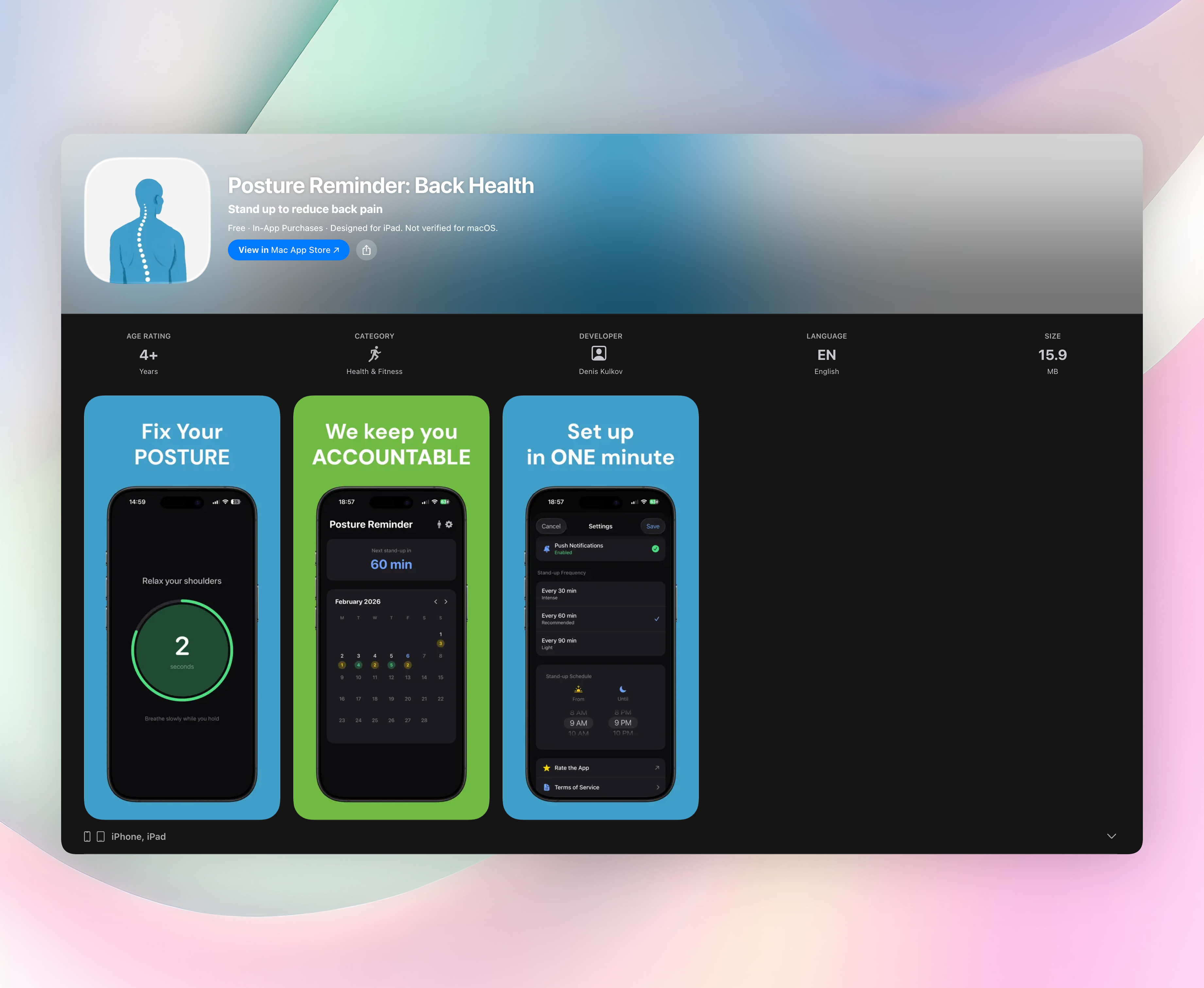
A seat that's too low forces the tuck no matter how attentive you are, so set the hips level with or just above the knees and follow the usual desk sitting posture rules.
FAQ
How do I know if I have anterior or posterior pelvic tilt?
Use the wall test, then check the landmarks. Excess space behind your lower back and an ASIS sitting lower than the pubic bone point to anterior tilt; almost no space and a pubic bone riding high point to posterior. Test seated as well as standing — people switch patterns between the two.
How to fix swayback posture?
Swayback has two components: the backward pelvic tilt and the forward shift of the hips relative to the ankles. Working the tilt while leaving the hips parked ahead of the ankles leaves the shape intact. Standing with weight through the mid-foot rather than the heels is the piece people skip.
Do tight hamstrings always cause a posterior tilt?
Not always, but they're a frequent contributor because they anchor to the back of the pelvis. Stiff hamstrings plus abdominals pulling the ribs and pubic bone toward each other is the common combination. Length work alone won't change the resting position if nothing trains the pelvis to sit differently.
Is a posterior pelvic tilt something to worry about?
A degree of tilt in either direction is normal variation — assessment describes a shape, it doesn't diagnose anything by itself. What's worth attention is a pelvis locked in one position all day with no ability to move out of it. Pain or persistent symptoms belong with a clinician, not a self-assessment.
Free Posture Reminder tools
- Anterior Pelvic Tilt TestThis anterior pelvic tilt test turns standing side-view observations into a simple posture score and neutral-position cues. It is a non-diagnostic screen, not a clinical assessment.
- Desk Chair Height CalculatorEstimate a desk chair height range from your height and desk height, then check whether your current chair supports a workable seated posture.
- Forward Head Posture CheckerUse a side-profile photo to estimate your craniovertebral angle with two clicks. This posture checker is a rough self-check, not a diagnosis.
- Monitor Height Ergonomics CalculatorEnter your seated eye height, monitor height, screen height and viewing distance to compare your setup with monitor height ergonomics targets.
- Posture Assessment ScoreAnswer a few desk posture questions, add your seated minutes and breaks, and get a non-diagnostic score with the highest-impact setup habits to review.
- Proper Sitting Posture at Desk CheckerCompare your desk, chair and monitor dimensions with height-scaled targets for a practical 90-90-90 sitting setup.
- Standing Desk Converter PlannerPlan a conversion standing desk setup from your body height, current desk, monitors and laptop. Get the converter lift, minimum surface width and estimated load.
- Standing Desk Height CalculatorEstimate a comfortable starting height for your standing desk, monitor, chair and screen viewing distance. Enter your body height and shoe heel height in centimetres or inches.
- Standing Desk TimerSet a sit/stand pattern and work-block length, then follow a live countdown with the next switch time, full schedule and sitting and standing totals.
- Wall Test Posture CheckUse a wall test for posture to record four contact findings and two gap measurements. Get a rough posture score, plain-language suggestions and the finding to address first.
- Workspace Ergonomics CalculatorUse an ergonomics calculator to set a desk or keyboard height, seat height, monitor top and viewing distance for seated or standing work.