iPhone & Apple Watch · Free
The Ultimate Posture Reminder App in 2026
Posture Reminder: Back Health is the free way to break up long sitting and keep your posture on track. A gentle nudge, a quick guided stand break, and a streak that makes it stick — no account, no ads.

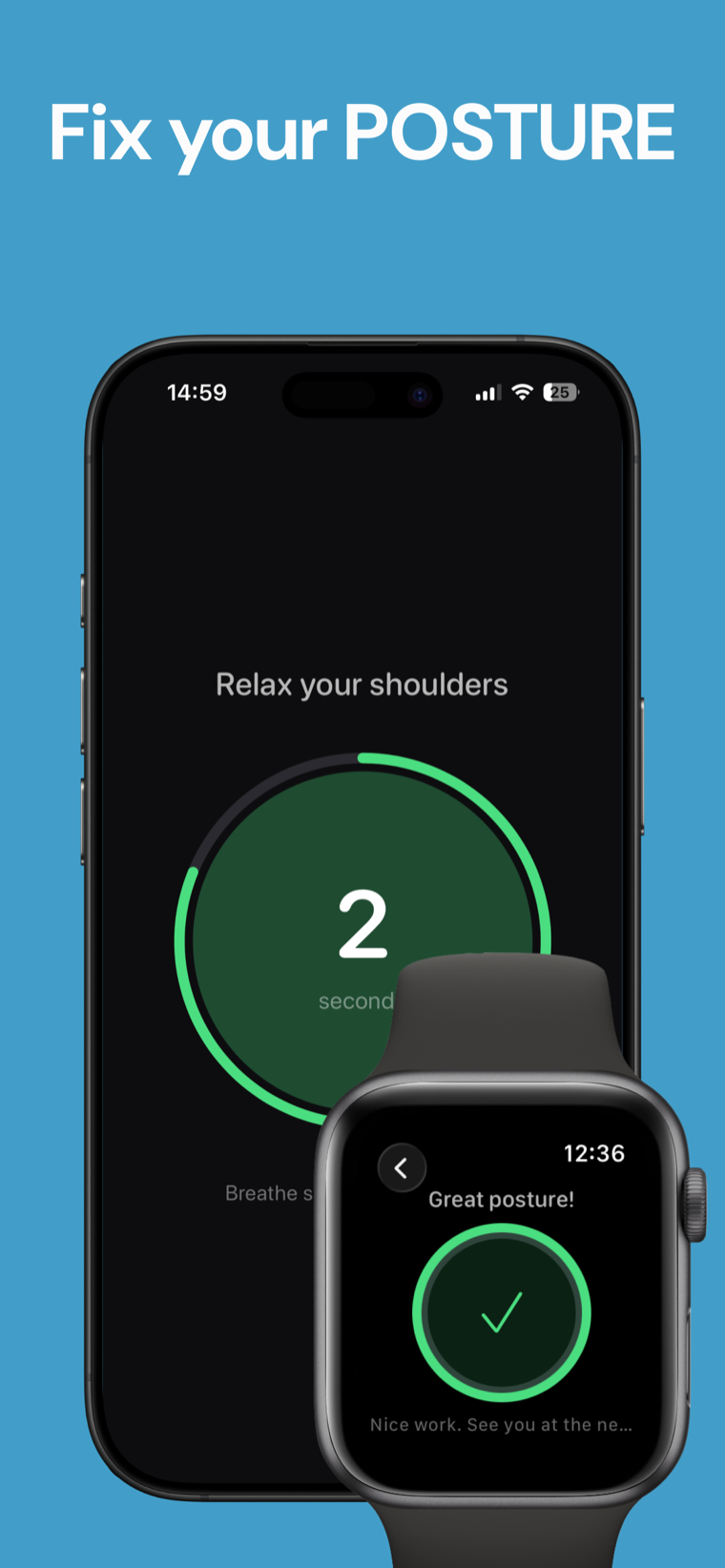
Features
-
Nudges timed to your day
A gentle prompt to stand and move, scheduled around when you're actually sitting rather than at arbitrary intervals.
-
Guided stand breaks
Each break comes with a clear on-screen prompt, so you know what to do with the thirty seconds instead of just standing up.
-
Streaks with shields
Build a daily streak, and use streak shields to protect it on the days life gets in the way. One bad day shouldn't end the habit.
-
47 achievements and levels
Progress markers that reward consistency over intensity, with rotating challenges that keep the routine from going stale.
-
iPhone and Apple Watch
Start a break from your wrist or check when the next one is due. The nudge reaches you whether or not your phone is nearby.
-
Yours, on your device
Everything runs locally. No accounts, no data collection, no ads.
Screenshots
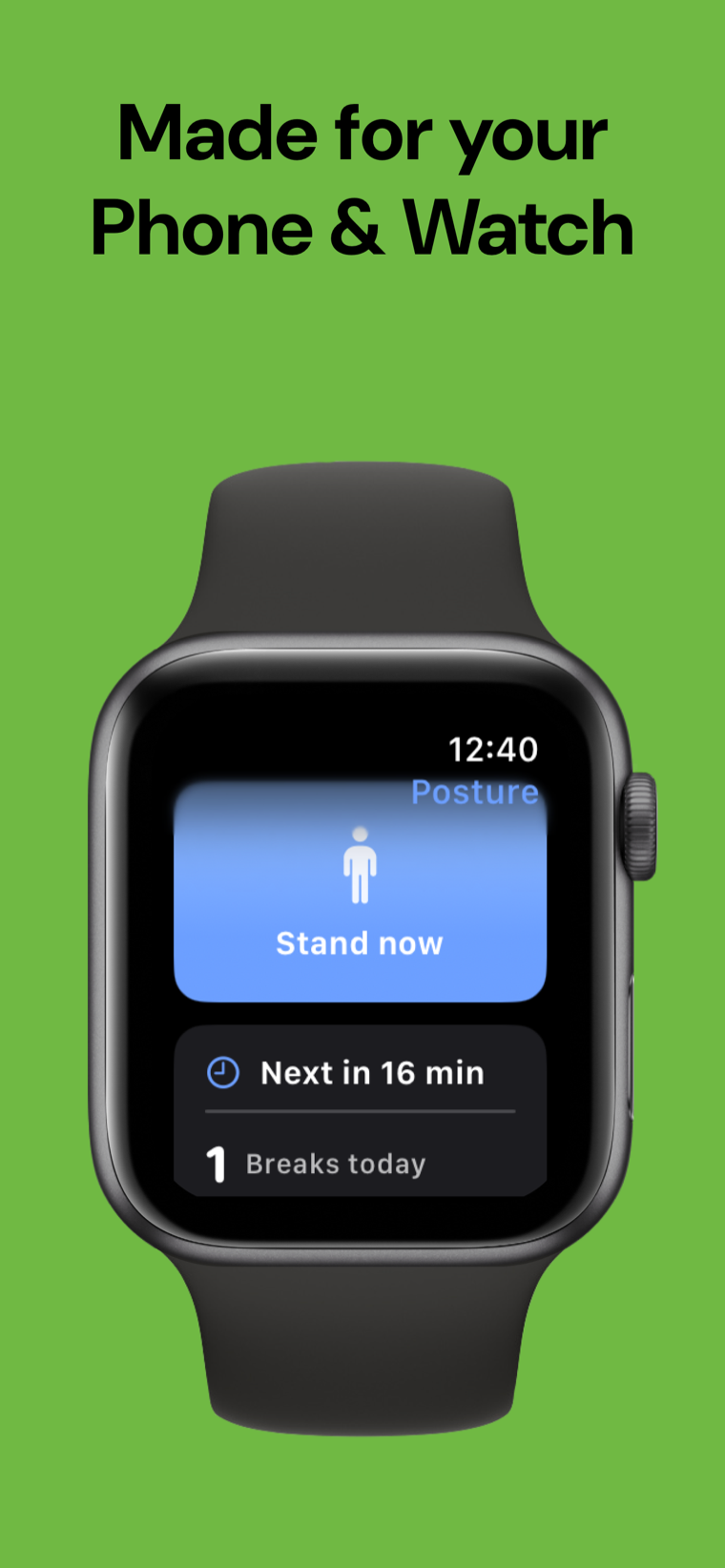
Start a break straight from your Apple Watch, or glance down to see when the next one is due — without picking up your phone.
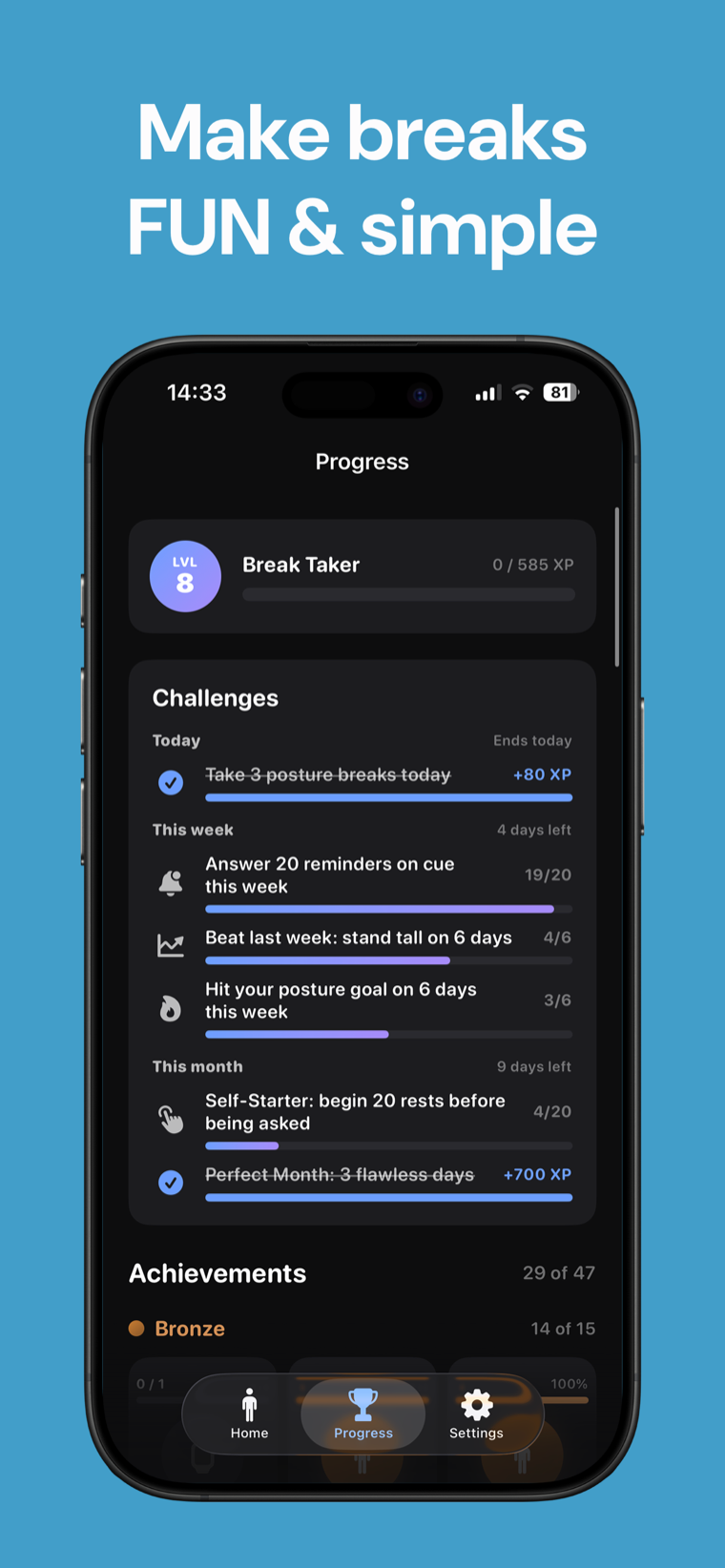
Daily streaks with shields for the days you miss, 47 achievements, levels, and challenges that rotate so it stays interesting.
How it works
-
Set your rhythm
Tell the app when your day runs and how often you want nudging. Setup takes about a minute.
-
Stand when it asks
A gentle prompt arrives on your phone or wrist. Follow the on-screen guide for a few seconds of movement.
-
Keep the streak
Each break feeds your daily streak, levels and achievements — and the Progress tab shows the habit building over time.
FAQ
Frequently asked questions
Is Posture Reminder free?
Yes. The app is free to download and use, with no ads and no account required.
How often does it remind me?
You set the rhythm during setup, and the nudges are timed to your day rather than firing at fixed intervals regardless of what you're doing.
What happens during a stand break?
The app shows a clear on-screen prompt walking you through a short movement break, so you're not left guessing what to do once you're standing.
Does it work on Apple Watch?
Yes. There's a companion Apple Watch app — you can start a break from your wrist and check when the next one is due without reaching for your phone.
What are streak shields?
They protect your daily streak when you miss a day. The point is to keep a single bad day from ending a habit you've spent weeks building.
Why does breaking up sitting matter?
Long unbroken sitting is what leads to back pain, a stiff neck and slouching. Standing and moving for a few seconds regularly is the simple fix — the hard part is remembering, which is what the app handles.
Can I see my progress over time?
Yes. The Progress tab shows your levels, achievements and history at a glance, so you can see the habit accumulating rather than just today's count.
Are there challenges?
Yes. Challenges rotate over time to keep the routine fresh, alongside 47 achievements and a levelling system that rewards consistency.
Will it nag me all day?
No. The nudges are gentle and scheduled to your day. It's designed to be a prompt you're glad to see, not an alarm you learn to dismiss.
Do I need an internet connection or an account?
No. Everything runs on your device. There's no sign-up, no login and no data collection — it works fully offline.
Does it actually track my posture with a sensor?
No. Posture Reminder isn't a posture sensor — it prompts you to stand and move on a schedule and tracks whether you took the break. The benefit comes from breaking up sitting consistently.
Is this a substitute for medical treatment?
No. It's a habit tool for taking regular movement breaks, not a medical device. If you have persistent back or neck pain, see a clinician.
Your back wants you to stand up.
Download Posture Reminder and make movement breaks something you actually do.
Free Posture Reminder tools
- Anterior Pelvic Tilt TestThis anterior pelvic tilt test turns standing side-view observations into a simple posture score and neutral-position cues. It is a non-diagnostic screen, not a clinical assessment.
- Desk Chair Height CalculatorEstimate a desk chair height range from your height and desk height, then check whether your current chair supports a workable seated posture.
- Forward Head Posture CheckerUse a side-profile photo to estimate your craniovertebral angle with two clicks. This posture checker is a rough self-check, not a diagnosis.
- Monitor Height Ergonomics CalculatorEnter your seated eye height, monitor height, screen height and viewing distance to compare your setup with monitor height ergonomics targets.
- Posture Assessment ScoreAnswer a few desk posture questions, add your seated minutes and breaks, and get a non-diagnostic score with the highest-impact setup habits to review.
- Proper Sitting Posture at Desk CheckerCompare your desk, chair and monitor dimensions with height-scaled targets for a practical 90-90-90 sitting setup.
- Standing Desk Converter PlannerPlan a conversion standing desk setup from your body height, current desk, monitors and laptop. Get the converter lift, minimum surface width and estimated load.
- Standing Desk Height CalculatorEstimate a comfortable starting height for your standing desk, monitor, chair and screen viewing distance. Enter your body height and shoe heel height in centimetres or inches.
- Standing Desk TimerSet a sit/stand pattern and work-block length, then follow a live countdown with the next switch time, full schedule and sitting and standing totals.
- Wall Test Posture CheckUse a wall test for posture to record four contact findings and two gap measurements. Get a rough posture score, plain-language suggestions and the finding to address first.
- Workspace Ergonomics CalculatorUse an ergonomics calculator to set a desk or keyboard height, seat height, monitor top and viewing distance for seated or standing work.
From the blog
All articles →- Anterior pelvic tilt: what's normal and how to fix itA normal pelvis already sits in some anterior pelvic tilt. Two at-home tests to check yours, the four muscles behind it, and what actually fixes it.
- Rounded shoulders: test first, then stretch or strengthenRounded shoulders come from a tight front, a weak back, or both. Run the supine pec length test, then use the doorway stretch or wall angels that match.
- Neck hump: what it is and which kind responds to exerciseA neck hump can be postural rounding, a fat pad, or structural kyphosis. Use the foam roller self-check to tell them apart, plus an 8-12 week exercise plan.