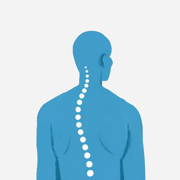
Forward Head Posture Checker
Use a side-profile photo to estimate your craniovertebral angle with two clicks. This posture checker is a rough self-check, not a diagnosis.
Your photo will appear here.
Craniovertebral angle
Mark C7 and the tragus to see a result.
—degrees
—
Commonly cited bands vary between studies. This is a rough self-check, not a diagnosis.
iPhone & Apple Watch · Free
Track it in Posture Reminder.
Keep posture check photos and measurements private on your device.

How this posture checker works
A posture checker can estimate the craniovertebral angle (CVA), the angle between a horizontal line through the C7 spinous process and the line joining C7 to the tragus of the ear. Pick a side-profile photo, then mark those two points.
A CVA below 50 degrees is the threshold most commonly used in the literature to define forward head posture. Smaller angles mean the head sits further forward, but published thresholds vary between studies, so every band here is labelled commonly cited.
Camera height, lens distortion, how the person was standing and where the points were clicked can move the result by several degrees. Treat this as a rough self-check and compare like-for-like photos over time rather than trusting one number. It is not a diagnosis, and the link between posture and neck pain is weaker and more contested than commonly claimed. Pain, numbness or tingling belongs with a clinician.
CVA = atan2(y₁ − y₂, |x₂ − x₁|) × 180 ÷ π Forward head posture checker FAQ
What points do I click?
Click the C7 vertebra at the base of the neck and the tragus, the small cartilage point just in front of the ear. Use the buttons to choose which point you are placing or replacing.
Does my photo leave my device?
No. The photo is read and drawn locally in your browser. It is never uploaded, sent anywhere or stored by this tool.
What does a lower CVA mean?
A smaller angle means the head sits further forward relative to C7. The bands are commonly cited reference points, not a diagnosis.
How accurate is the result?
Camera height, lens distortion, posture and click placement can move the result by several degrees. Compare similar photos over time instead of treating one number as definitive.
Should I use this for neck pain?
No. This is a rough self-check, not medical advice. Pain, numbness or tingling belongs with a clinician.