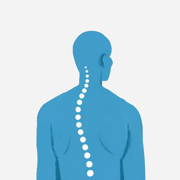
Posture Assessment Score
Answer a few desk posture questions, add your seated minutes and breaks, and get a non-diagnostic score with the highest-impact setup habits to review.
Your result
—
Your result
— / 4
—
Highest-impact habits to review
This non-diagnostic score is a prompt for setup review, not a diagnosis.
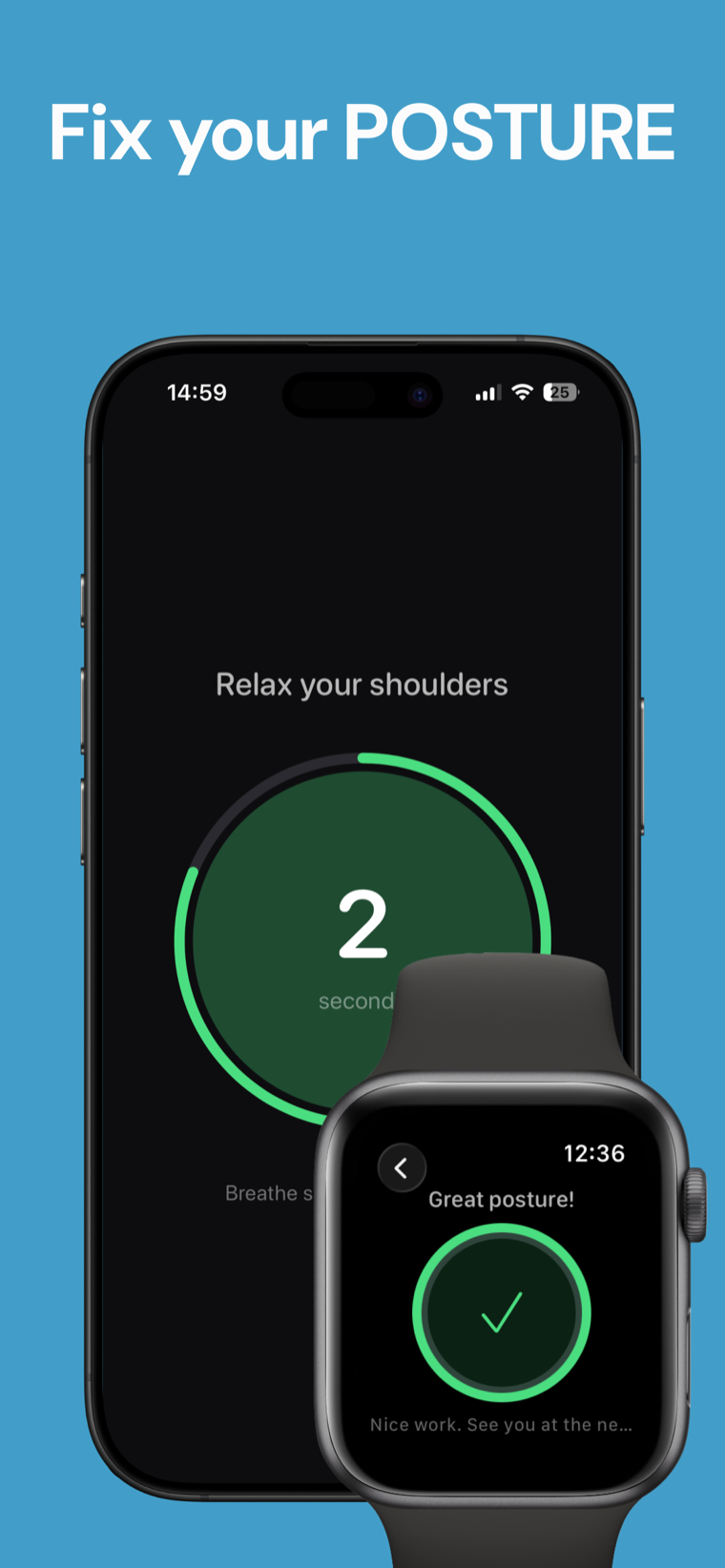
iPhone & Apple Watch · Free
Track it in Posture Reminder.
Turn desk-ergonomics awareness into practical posture reminders on your device.

How this posture assessment score works
This posture assessment score turns observable desk setup answers into a simple review prompt. It checks whether your desk or keyboard surface is near seated elbow height, whether your elbows are in the 90–110 degree range, whether your forearms are parallel to the floor, and whether your feet and thighs are positioned as described in the ergonomics reference.
Each setup answer earns a point. The tool subtracts points for long uninterrupted sitting relative to the breaks you enter, then maps the result to a descriptive improvement band. It does not diagnose a condition or measure your posture, and a single score is not a diagnosis; a clinician decides that.
For context, seated elbow height and popliteal height are each approximately 0.25 × stature, while standing work-surface height is approximately 0.63 × stature. These are setup relationships to review, not a substitute for an individualized assessment.
score = max(0, setup points − max(0, floor(minutes seated ÷ breaks) − 1)) This is a non-diagnostic self-assessment. A single reading or score is not a diagnosis, and a clinician decides whether a health concern is present.
Posture assessment FAQ
What does this posture assessment score mean?
It is a descriptive review of the desk setup answers and sitting pattern you enter. It is not a diagnosis, measurement, or medical assessment.
Which setup relationships does it check?
It checks seated elbow height, 90–110 degree elbows, forearms parallel to the floor, and feet flat with thighs roughly parallel to the floor.
Why does sitting time change the score?
The requested scoring model subtracts points for long uninterrupted sitting relative to the breaks you enter. The result is a prompt to review habits, not a published clinical cutoff.
How should I use the highest-impact habits list?
Use it as a checklist when reviewing your desk. If you have pain, numbness, weakness, or another concern, a clinician decides what evaluation or advice is appropriate.
Are my answers saved?
No. The calculation runs in your browser and this component does not send your answers over the network.