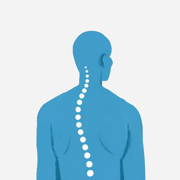
Wall Test Posture Check
Use a wall test for posture to record four contact findings and two gap measurements. Get a rough posture score, plain-language suggestions and the finding to address first.
Posture score
—
Posture score
— / 100
Address first: —
A rough self-check at one moment, not a measurement or diagnosis.
iPhone & Apple Watch · Free
Track it in Posture Reminder.
Keep posture checks and notes private on your device, with no account required.

How to do this wall test for posture
Stand with your heels about 2–4 inches (5–10 cm) from a flat wall, feet shoulder-width apart, looking straight ahead. The back of your head, shoulder blades and buttocks should all make contact with the wall naturally, without forcing.
Slide a flat hand into the gap behind your lower back and behind your neck. A gap of roughly one hand's thickness—about 2 inches / 5 cm—is the commonly taught reference at each location.
This is a rough self-check at one moment in time, not a measurement or diagnosis. Perfect posture is not a single fixed shape, posture varies through the day, and changing position often matters more than holding one ideal. Pain, numbness, tingling or a sudden change should go to a clinician rather than a web page.
Score = head contact (15) + shoulder-blade contact (15) + buttocks contact (30 for two contact points) + lower-back gap (20) + neck gap (20) = 100 points The findings are phrased as suggestions, not diagnoses. The evidence linking a particular standing posture to back pain is weaker than the wellness industry implies. Values stay in your browser and are not sent anywhere.
Wall test posture check FAQ
What does this posture score mean?
It is a transparent, rough self-check: four contact findings contribute 15 points each and the two gap measurements contribute 20 points each. It is not a clinical measurement or diagnosis.
What gap should I expect at my lower back and neck?
The commonly taught reference is roughly one flat hand's thickness, about 2 inches / 5 cm, at each gap. Do not force your head, shoulders or back into position.
What does it suggest if my head does not touch?
If the head does not touch without straining, that is consistent with forward head posture, commonly associated with desk and phone use. This wording is a suggestion, not a diagnosis.
Can this test tell me whether I have a medical problem?
No. Perfect posture is not one fixed shape, and posture changes through the day. Pain, numbness, tingling or a sudden change should be discussed with a clinician.
Are my answers stored?
No. This tool runs in your browser and does not store or send the answers.