Yoga for posture: a five-pose sequence for desk-bound backs
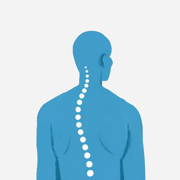
Yoga for posture is best understood as mobility and awareness training, not a correction. The poses worth your time open a stiff mid-back and a tight chest, and they teach you where neutral actually is. What they don't build is the pulling strength that holds you there.
What yoga for posture changes, and what it doesn't
Desk posture is a habit propped up by three things: a thoracic spine that has stopped extending and rotating, short tissue across the chest and front of the shoulder, and a mid-back that almost never works hard. Yoga is well suited to the first two and poor at the third, because very little in a standard practice is a pulling movement.
The awareness piece is underrated: a few minutes of slow spinal work most days makes it obvious when you have collapsed at hour six, rather than an hour later.
Set expectations on the rest. The research is thin, and much of what exists follows older adults with an already pronounced thoracic curve over months of practice, reporting modest changes. This is general information rather than treatment: pain that radiates into an arm or leg, wakes you at night, or comes with numbness or weakness belongs with a physician or physical therapist first.
Five yoga poses for posture that earn their place
Each one has a specific job. Skip anything that doesn't.
Cat-cow: segmental mobility and finding neutral
On all fours, hands under shoulders, knees under hips. Exhale and round the spine from the tailbone up; inhale and reverse it, opening the chest without cranking the head back. Eight to ten slow cycles. Most people rush the cat cow stretch and move the whole back as one block — the value is in traveling through the spine a segment at a time. Then stop halfway between the two shapes: that middle position is roughly a neutral spine, the one you want in a chair.
Sphinx: passive thoracic extension
Lie face down, elbows under the shoulders, forearms parallel. Press the forearms lightly into the floor and drag them back toward your hips without actually moving them; the extension then travels into the mid-back instead of dumping into the low back. Hold 60 to 90 seconds. If anything pinches low, slide the elbows forward to flatten the angle. For anyone who sits, this is the highest-value shape here: the direct opposite of what a chair produces. More in that direction: thoracic mobility exercises.
Cobra: active extension
Hands under the shoulders, but lift with the back and use the arms only to steady yourself. Low is fine — chest a few inches off the floor. Keep the front ribs from flaring and the neck long. Three to five lifts, three breaths each. Sphinx stretches; cobra asks the spinal extensors to work a little, which is closer to what an all-day slump needs.
Thread the needle: rotation
From all fours, slide the right arm under the left, letting the right shoulder and temple rest on the floor. Keep the hips stacked over the knees so the rotation happens in the ribcage, not the pelvis. Five to eight breaths per side. Rotation is the range desk sitting loses quietly, and it is why this doubles as yoga for neck and shoulders — when the upper back gives up rotation, the neck borrows it.
Reclined chest opener: no doorway required
Put a rolled towel or foam roller lengthwise along your spine, head supported at the top, knees bent. Take the arms out wide, elbows bent to roughly 90 degrees, palms up, and let gravity carry them toward the floor. One to two minutes. If your hands don't reach the floor, leave them where they land — that is the stretch.
Yoga vs pilates for posture
| Aspect | Yoga | Pilates |
|---|---|---|
| Main contribution | Range of motion, long holds, body awareness | Trunk endurance and scapular control |
| Spine work | Large shapes, end-range extension and rotation | Small movements with a deliberately set ribcage |
| Pulling strength | Almost none | Some, mainly in spring-loaded reformer work |
| Best at | Undoing stiffness and noticing the slump | Holding a position longer before it fatigues |
Pilates for posture tends to win on endurance and control, yoga on range and awareness, and both leave the same hole. Pick the one you will actually show up for.
Where yoga stops: the pulling gap
Run through a typical class and count the pulls. Chaturanga, plank, downward dog, arm balances — pushing and holding, over and over. The muscles that draw the shoulder blades back and down get stretched around plenty and loaded almost never.
That matters for yoga for rounded shoulders in particular. Opening the front of the chest gives you room to sit taller; it doesn't give you anything that keeps you there once you stop thinking about it. Two or three sets of rows, band pull-aparts, or face pulls a couple of times a week cover what the mat leaves out.
The two-minute version for desk workers
Yoga for desk workers usually fails on logistics rather than motivation: the mat, the clothes, the 30 minutes. The version that survives a workday runs about two minutes, standing or seated:
- Eight seated cat-cows, hands on the knees, rounding and extending.
- Thirty seconds of chest opening — stand, clasp the hands behind you, lift the chest gently.
- Three breaths of seated rotation per side, hands on the chair back, turning from the ribs.
Frequency does most of the work. Two minutes every couple of hours interrupts the position better than one long class on Sunday, because it's the eight hours that build the habit. Posture Reminder, a posture reminder app for iPhone and Apple Watch, helps for that unglamorous reason: the decision to stop and move gets made by something other than your own concentration, which is where it dies on the days the mat stays rolled up.

FAQ
Does yoga improve posture?
It improves the ingredients — thoracic extension, rotation, chest length, and your awareness of how you are sitting. Whether anything looks different depends more on the other eight hours, so pair it with pulling work and a desk setup that doesn't fight you.
How often should I do yoga for posture?
Short and frequent beats long and rare: five to ten minutes most days, plus a longer session once or twice a week if you enjoy it. Give it a couple of months before judging it.
Which style of yoga is best for posture?
Styles that hold poses and cue alignment — hatha, Iyengar, or a slow flow — give you more time in the shapes that matter. Power and vinyasa classes are good conditioning but heavy on pushing.
Can I do these poses at a desk?
Cat-cow and rotation translate to a chair directly. Sphinx and cobra don't, but a gentle standing extension with the hands on the low back covers similar ground.
Free Posture Reminder tools
- Anterior Pelvic Tilt TestThis anterior pelvic tilt test turns standing side-view observations into a simple posture score and neutral-position cues. It is a non-diagnostic screen, not a clinical assessment.
- Desk Chair Height CalculatorEstimate a desk chair height range from your height and desk height, then check whether your current chair supports a workable seated posture.
- Forward Head Posture CheckerUse a side-profile photo to estimate your craniovertebral angle with two clicks. This posture checker is a rough self-check, not a diagnosis.
- Monitor Height Ergonomics CalculatorEnter your seated eye height, monitor height, screen height and viewing distance to compare your setup with monitor height ergonomics targets.
- Posture Assessment ScoreAnswer a few desk posture questions, add your seated minutes and breaks, and get a non-diagnostic score with the highest-impact setup habits to review.
- Proper Sitting Posture at Desk CheckerCompare your desk, chair and monitor dimensions with height-scaled targets for a practical 90-90-90 sitting setup.
- Standing Desk Converter PlannerPlan a conversion standing desk setup from your body height, current desk, monitors and laptop. Get the converter lift, minimum surface width and estimated load.
- Standing Desk Height CalculatorEstimate a comfortable starting height for your standing desk, monitor, chair and screen viewing distance. Enter your body height and shoe heel height in centimetres or inches.
- Standing Desk TimerSet a sit/stand pattern and work-block length, then follow a live countdown with the next switch time, full schedule and sitting and standing totals.
- Wall Test Posture CheckUse a wall test for posture to record four contact findings and two gap measurements. Get a rough posture score, plain-language suggestions and the finding to address first.
- Workspace Ergonomics CalculatorUse an ergonomics calculator to set a desk or keyboard height, seat height, monitor top and viewing distance for seated or standing work.