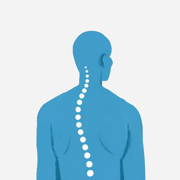
Ergonomic desk setup: the numbers and the order to set them
An ergonomic desk setup puts your elbows and knees at 90–110 degrees, the top edge of your monitor at or just below eye level, and the screen 20–30 inches from your eyes. Set it in one order — chair, desk, monitor, accessories — or you'll adjust everything twice.
The ergonomic desk setup order: chair, desk, monitor, accessories
Every measurement depends on an upstream one: seat height sets elbow height, elbow height sets desk height, and both set eye height, which sets the monitor. Start with the monitor and you'll move it again the moment you touch the chair.
- Chair — seat height, depth, backrest, armrests
- Desk — surface at seated elbow height
- Monitor — height, distance, angle
- Accessories — keyboard, mouse, footrest, lighting
Step 1: ergonomic chair setup
Most of this job is knowing how to adjust an office chair, and it goes bottom to top. Stand in front of the seat and set its height so the seat pan is level with your kneecap crease, shoes on. Sit: feet flat, thighs roughly parallel to the floor, knees between 90 and 110 degrees. Slightly open beats a strict right angle.
- Seat depth. Two to three fingers of clearance between the front edge of the seat and the back of your knees. Too deep and you slide forward to escape the pressure, which abandons the backrest.
- Lumbar support. The lumbar curve should sit in the small of your back, near belt height. If the pad doesn't move on its own, raise or lower the whole backrest.
- Recline. A trunk-to-thigh angle near 100–110 degrees loads the lower back less than sitting bolt upright at 90. Lock it there, or leave the tilt free with enough tension to lean against.
- Armrests. Forearms resting lightly, shoulders down — not shrugged, not dangling. If they collide with the desk edge, drop them or take them off.
Note that elbow height — it's the reference for the next two steps. A chair set this way is also most of what good sitting posture asks for, since it holds a neutral spine without your muscles doing the work.
Step 2: proper desk height for your height
The work surface belongs at your seated elbow height, or up to an inch below it, so your forearms run roughly parallel to the floor and your wrists stay straight.
Standard fixed desks in the US are 29–30 inches (74–76 cm), which suits someone around six feet tall. Everyone shorter is working at a desk that's too high, typing with their shoulders raised.
| Your height | Seated desk height | Standing desk height |
|---|---|---|
| 5'0" (152 cm) | ~24 in (61 cm) | ~37 in (94 cm) |
| 5'3" (160 cm) | ~25 in (64 cm) | ~39 in (99 cm) |
| 5'6" (168 cm) | ~26 in (66 cm) | ~41 in (104 cm) |
| 5'9" (175 cm) | ~27.5 in (70 cm) | ~43 in (109 cm) |
| 6'0" (183 cm) | ~29 in (74 cm) | ~44.5 in (113 cm) |
| 6'3" (191 cm) | ~30 in (76 cm) | ~46.5 in (118 cm) |
Those are starting points, not fixed rules — torso-to-leg ratio varies at the same overall height, so trust your elbows over the table.
Step 3: monitor height ergonomics
Put the top edge of the screen at or slightly below eye level; zero to two inches under is a reliable window. Your resting gaze sits naturally around 15 degrees below horizontal, so a screen mounted too high holds your neck in extension for hours. Too low and your head tips forward, and the further it sits ahead of your shoulders, the harder your neck works.
- Distance: 20–30 inches (50–76 cm) from your eyes; arm's length is the quick field check. On a 27-inch or ultrawide display, use the far end of that range and increase text size instead.
- Angle: tilt the screen back 10–20 degrees so its face is roughly perpendicular to your line of sight.
- Position: centered on your body's midline, directly in front. Off to one side is a permanent low-grade neck rotation.
- Two monitors: used equally, put the seam on your midline; if one is primary, that one goes dead ahead.
- Progressive or bifocal lenses: go several inches lower than the standard rule, or you'll tip your head back all day hunting for the reading segment.
Step 4: keyboard, mouse, and the rest
- Keyboard at or just below elbow height, flat or tilted slightly away from you so the front edge sits higher than the back. Flip-out keyboard legs do the opposite, bending your wrists upward — leave them folded.
- Wrists straight and floating while you type. A wrist rest is for pauses, not a place to pin your palms while your fingers stretch for keys.
- Mouse on the same plane as the keyboard, immediately beside it. Reaching forward or out to the side moves the load to your shoulder.
- Feet flat, with a footrest if the chair had to come up to meet the desk.
- Lighting. Set the monitor perpendicular to windows. A window behind the screen makes you squint; one behind you throws glare onto it.
The laptop-only fix
A laptop can't satisfy both rules at once. Screen at eye level and keyboard at elbow height are about 15 inches apart, and a laptop welds them together, so either the screen is too low or the keyboard is too high.
Break the hinge apart: raise the laptop on a stand until its top edge reaches eye level, then add an external keyboard and mouse at elbow height. A stack of books and a cheap keyboard does the same job as a purpose-built riser.
When the desk height won't change
Most desks don't adjust. Compensate in this order:
- Raise the chair until your elbows meet the desk surface. Nothing else fixes wrist and shoulder position.
- Add a footrest so your feet stay supported and your knees stay near 90–110 degrees. Dangling feet are the usual cost of raising the chair.
- Or fit a keyboard tray, which buys back two to three inches without touching the chair.
If the desk is too low instead — common for taller people — risers under the legs are simpler than replacing it. Don't fix a low desk by dropping the chair, or you'll end up with your knees above your hips.
A good setup holds for about an hour
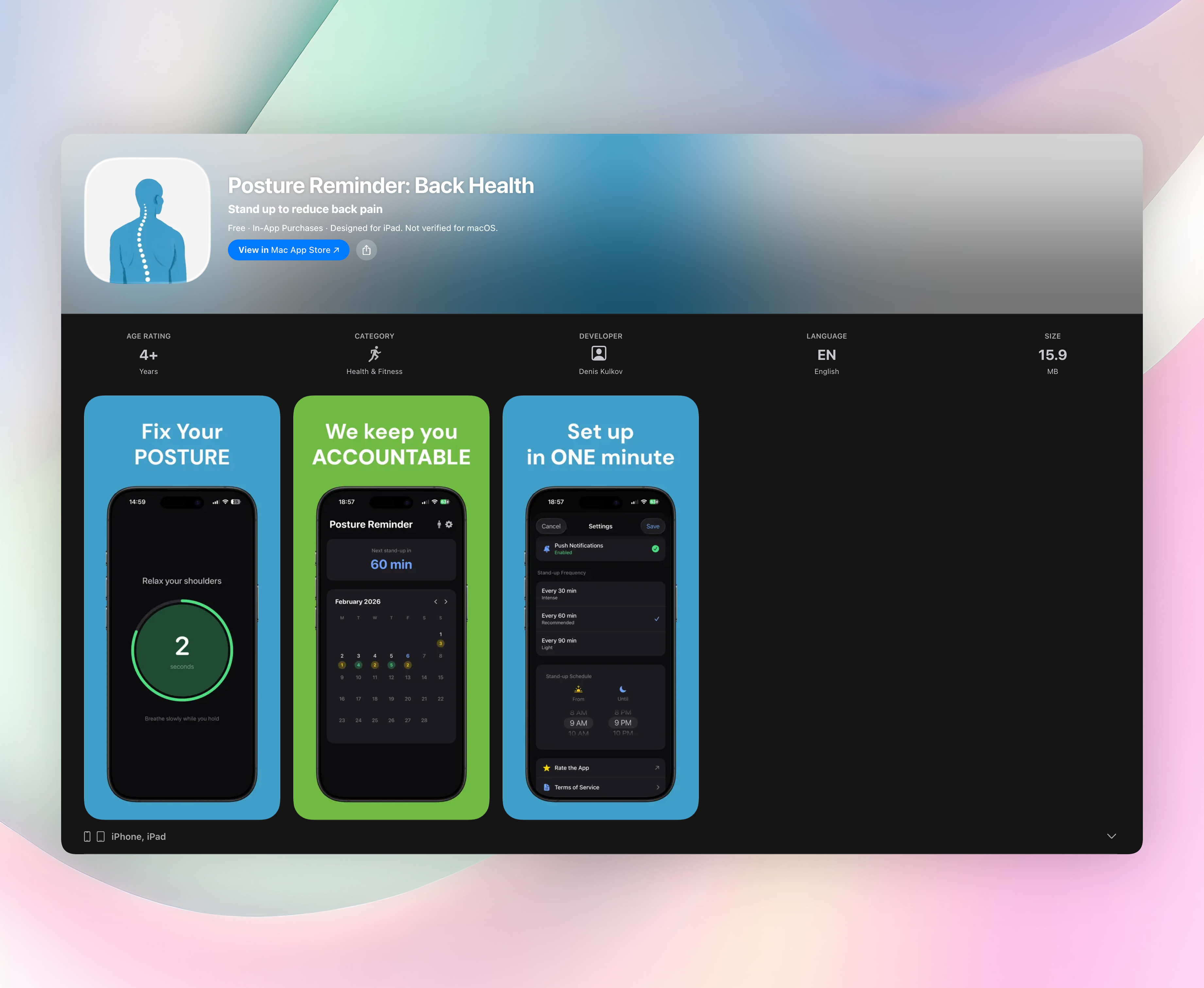
Fit determines how long you can hold a decent position, not whether you hold it. Twenty minutes into focused work you slide forward, the pelvis rolls back, and your head drifts toward the screen. No furniture prevents that. The drift is a habit, and habits respond to a cue. Posture Reminder, a posture reminder app for iPhone and Apple Watch, is one way to put that cue on a schedule instead of relying on catching yourself.
The second lever is not staying still: change position every half hour and stand for part of the day. More on the habit side in how to fix posture.
FAQ
How high should my monitor be?
Top edge at or up to two inches below eye level, with the screen 20–30 inches from your eyes. If you wear progressive or bifocal lenses, go lower — far enough to read through the bottom of the lens without tipping your head back.
What desk height do I need if I'm 5'4"?
Around 25–26 inches (64–66 cm) seated, three to four inches below a standard 29-inch desk. Since most desks are fixed, raise your chair until your elbows meet the surface, then add a footrest.
Should my knees be at exactly 90 degrees?
No. Anywhere from about 90 to 110 degrees works, and slightly open is often more comfortable. What matters more is that your feet are supported and the seat edge isn't compressing the back of your thighs.
Can an ergonomic desk setup fix back or neck pain?
Ergonomics is fit guidance, not medical treatment. A better setup reduces the strain a fixed position puts on you, but pain has many causes. If you have persistent pain, numbness, or tingling, see a doctor or physical therapist rather than adjusting furniture and waiting it out.
Free Posture Reminder tools
- Anterior Pelvic Tilt TestThis anterior pelvic tilt test turns standing side-view observations into a simple posture score and neutral-position cues. It is a non-diagnostic screen, not a clinical assessment.
- Desk Chair Height CalculatorEstimate a desk chair height range from your height and desk height, then check whether your current chair supports a workable seated posture.
- Forward Head Posture CheckerUse a side-profile photo to estimate your craniovertebral angle with two clicks. This posture checker is a rough self-check, not a diagnosis.
- Monitor Height Ergonomics CalculatorEnter your seated eye height, monitor height, screen height and viewing distance to compare your setup with monitor height ergonomics targets.
- Posture Assessment ScoreAnswer a few desk posture questions, add your seated minutes and breaks, and get a non-diagnostic score with the highest-impact setup habits to review.
- Proper Sitting Posture at Desk CheckerCompare your desk, chair and monitor dimensions with height-scaled targets for a practical 90-90-90 sitting setup.
- Standing Desk Converter PlannerPlan a conversion standing desk setup from your body height, current desk, monitors and laptop. Get the converter lift, minimum surface width and estimated load.
- Standing Desk Height CalculatorEstimate a comfortable starting height for your standing desk, monitor, chair and screen viewing distance. Enter your body height and shoe heel height in centimetres or inches.
- Standing Desk TimerSet a sit/stand pattern and work-block length, then follow a live countdown with the next switch time, full schedule and sitting and standing totals.
- Wall Test Posture CheckUse a wall test for posture to record four contact findings and two gap measurements. Get a rough posture score, plain-language suggestions and the finding to address first.
- Workspace Ergonomics CalculatorUse an ergonomics calculator to set a desk or keyboard height, seat height, monitor top and viewing distance for seated or standing work.